

Klarna posted great results, 2027 will be the year of inflection.
Worldex with net cash of ~38% of market cap and a new activist/institutional investor.
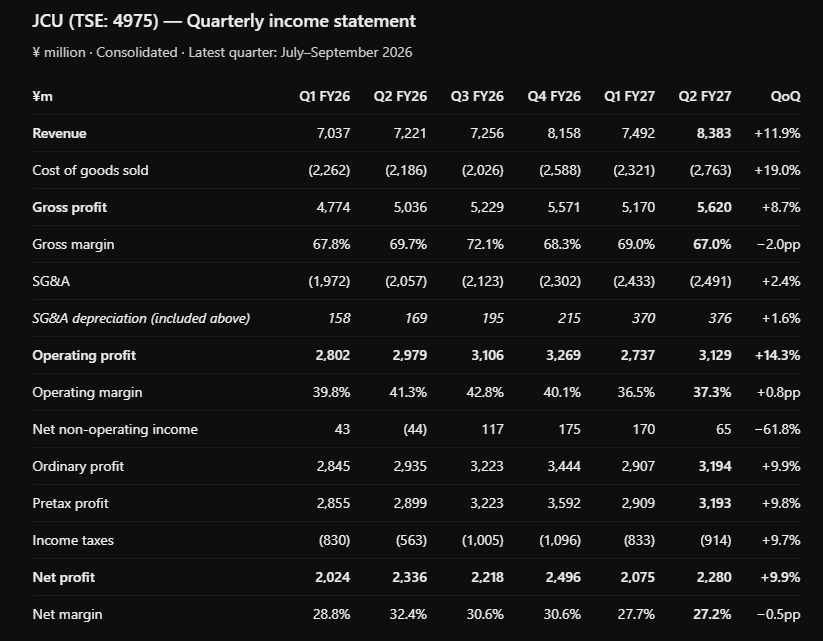
JCU Corporation hits highest ever revenue in a quarter (and share price has completely round-tripped?)- operating profit drops (but adjusting for new Kumamoto factory’s depreciation- operating profit was actually up ever so slightly, also factoring in FX adjustments). I have re-instated a full position.

Klarna (NYSE: KLAR) +10%
I am going to write a part 2 for the Klarna pitch. I wanted to get it out on the weekend, and was only able to publish on Monday. It is a high quality business, and it looks like it has a lot of runway ahead of it.
Earnings
Earnings were good. The bump I expected in profit from the shift in strategy (to a capital light model) did not arrive- because management reversed their strategy- they have decided to retain loans, instead of sell them.
Long-term, I think this is the better approach. Selling the loans immediately would help Klarna’s income statement in the short-term, almost cosmetically by booking profits immediately.
Klarna can simply make more money long-term retaining the loans.
This means that future quarters may see slightly higher provisions for credit losses, but as Klarna matures, the income statement will start booking higher and higher interest income from these loans.
What matters
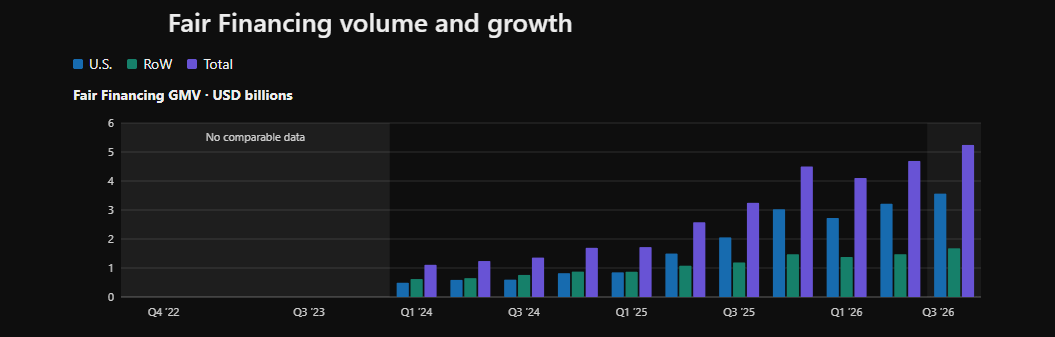
Fair financing continues to grow. This is where the inflection will come from. It’s high margin stuff.
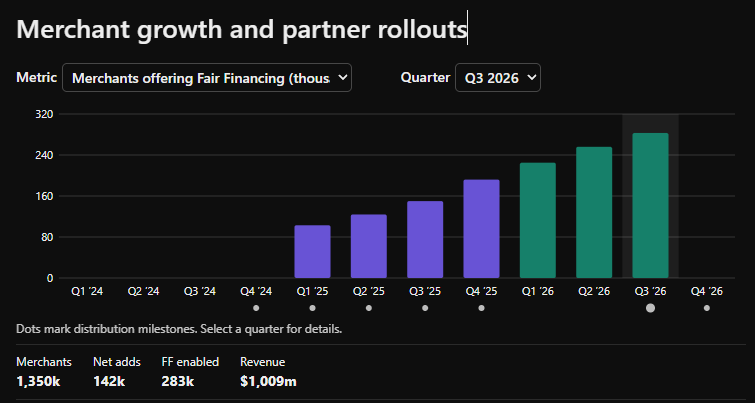
Merchants offering Fair Financing continues to grow, which is a revenue driver for FF.
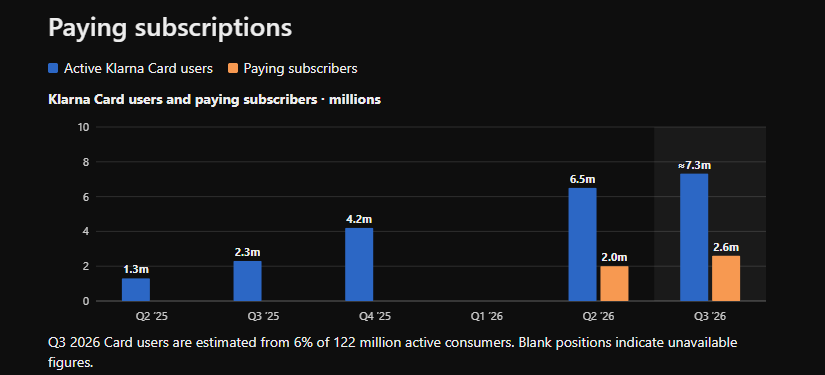
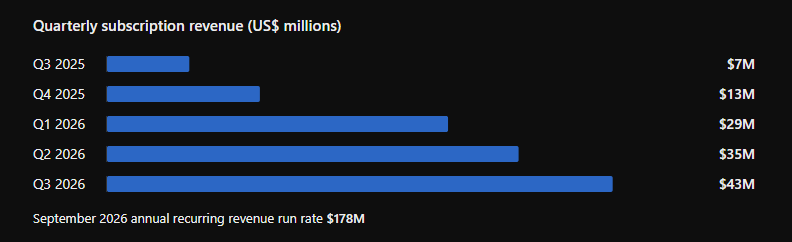
Also, card subscription grew fast. This is probably the highest margin revenue Klarna has. It’s also reccuring.
They don’t tell us the margin, but we can infer from Monzo’s 50% contribution margin that Klarna’s will be similar. It’s substantial because it’s growing very quickly and is already annualizing at close to ~200m.
Worldex (KOSDAQ: 101160) -6.5%
(-6.5% since pitching) Amidst a fall-out in the AI-trade, with some stocks down ~70%. Valuation offers a margin of safety.
Worldex is first and foremost a governance special situation, and secondly an AI-memory capacity expansion exposure.
If the governance gets sorted, I expect the company to re-rate at least ~100% to trade closer to peers.
Recap:
Bae (controlling shareholder) banned electronic voting and forced an in-person vote in Gumi (Korea) in an attempt to pass a vote on director-pay. Worldex has a fortune of cash (net cash ~38% of market cap), and Bae wanted to siphon it out through salaries, but he was voted down. Bae was using every dirty tactic in the book, and he lost. VIP Asset Management rallied shareholders and won the majority vote. This was an unexpectedly bullish development.
After this, with his tail in-between his legs, Bae promised to bring back electronic voting.
He caved to shareholder demands- promising a 40% payout policy and a buyback.
2027 AGM will be extremely interesting as 3 board seats are up for grabs.
Bae is getting old and wants to gift his shares to his youngest son.
The News:
Shareholder governance: the major developments
40% shareholder-return target for 2027–2028
Worldex reaffirmed its plan to return approximately 40% of annual net income through dividends and share repurchases/cancellations. Compare that with its actual 2025 cash dividend payout ratio of just 4.0%.
₩20bn share buyback underway
The programme began in July. Worldex had acquired 520,000 shares, representing 3.15% of issued capital, by 28 October. The November quarterly filing also discusses the subsequent repurchases and the planned cancellation of shares by July 2027.
Electronic voting has returned
Following the controversial June 29 EGM, where electronic voting was temporarily not offered, the company used electronic voting for its September EGM. This is relevant to minority-shareholder participation in future contests, although Worldex hasn’t committed to using it for every future meeting.
A new disclosed institutional shareholder
On November 13, UK-based Asset Value Investors disclosed a 5.31% holding, up from 4.99%, crossing the 5% reporting threshold.
AVI appears to have started buying Worldex sometime between April and September 2026.
31 March 2026 - No position reported
30 September 2026 - 4.5%
12 November 2026 - 5.31% across two AVI-managed funds
The UK-based Asset Value Investors (AVI) manages several activist-oriented funds. Its recently disclosed 5.31% stake in Worldex is overwhelmingly held through its flagship AVI Global Trust, a fund with an established history of shareholder activism.
AVI explicitly identifies Worldex as an asset-backed special situation, rather than a conventional semiconductor investment.
More importantly, AVI says it has 12 engagement-led positions in South Korea.
AVI declared its holding purpose as general investment, not an explicitly announced activist campaign. The same as VIP Asset Management. This could change if Bae doesn’t play ball.
Earnings
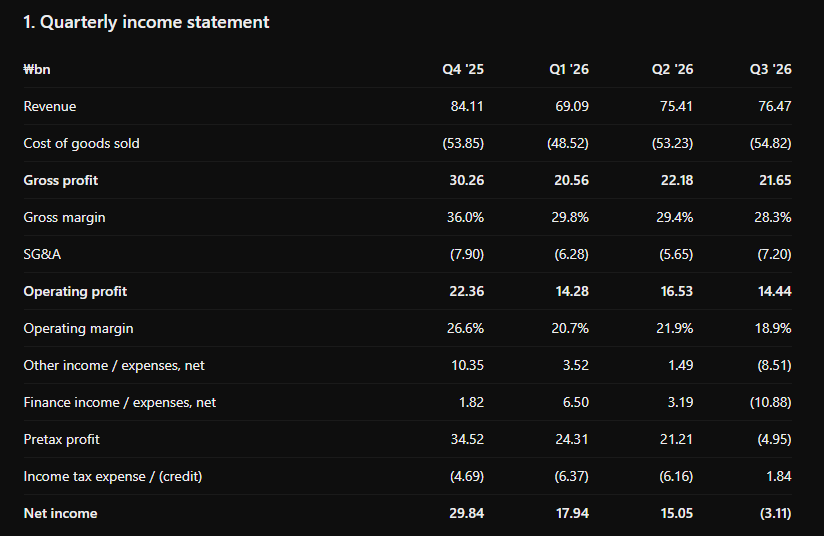
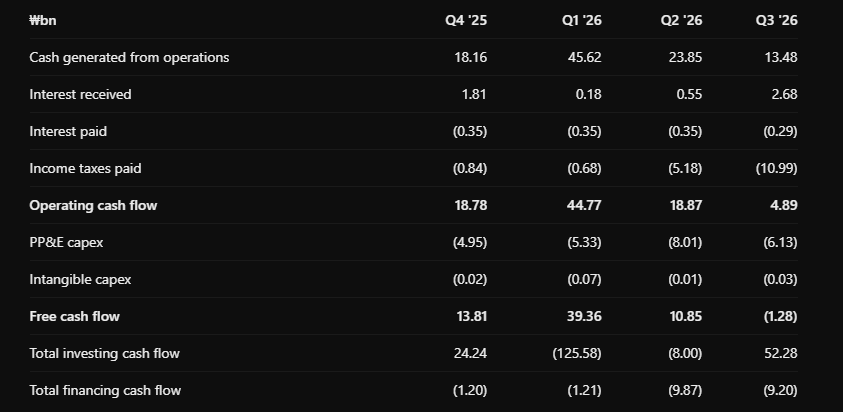
Nothing surprising with earnings. Revenue up 1 % QoQ.
Hana Materials, which should lead Worldex, posted better results. I still expect Worldex earnings to pick up later. It’s an aftermarket supplier.
The net less loss comes from forex effects associated with operating activitiets and forex effects associated with financial activities- not indicative of a business decline or anything of the sorts. Just a fluctuation in currencies.
The big long-term risk: Capex
In July Worldex announced its Corporate Value Enhancement Plan which was both bullish governance, but bearish capital allocation.
“TOTAL PLANNED INVESTMENT THROUGH 2030 ₩260 billion”
Worldex has an average 5 year ROIC of above 25%.
Net cash is at ~₩160 Billion.
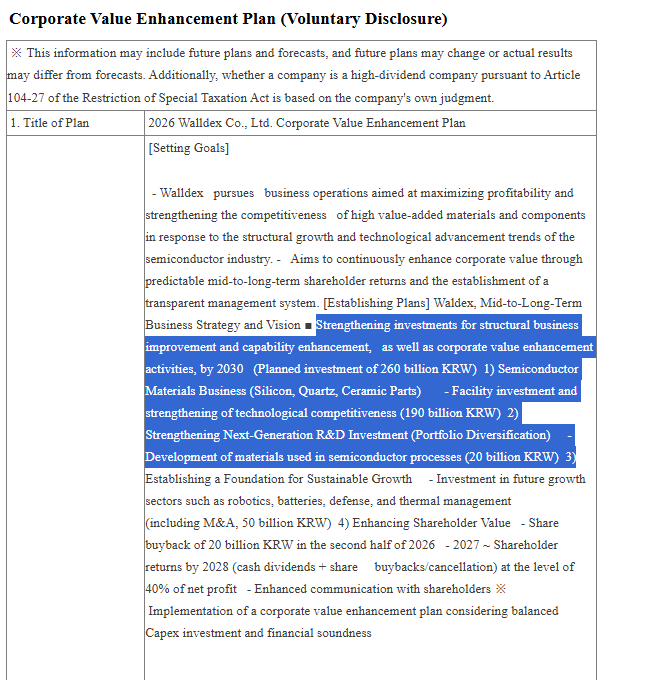
I’m sure investors would rather see a fat special dividend, but it might be better long-term if we get an extended payout policy of 40% coupled with buybacks, and a slightly less aggressive capex program.
I am personally against this aggressive capex program because competition in China and Korea is heating up. Bae is old, and his sons have not proven to be efficient capital allocators, so are they still able to earn 25% on ROIC going into the future? I am not so sure.
My conservative free cash flow estimate after maintencance capex (using D&A as a proxy) sits at around ~₩44 billion- 3 Year average.
Main catalyst remains the 2027 AGM. Holding strong.
JCU Corporation (70% to close and round-trip).
Full position re-initiated.
JCU Corporation was the company that got this Substack started. The thesis, almost one year ago, was that JCU was a high-quality moated company trading at a low valuation EV/EBIT and ~7–8× EV/FCFF, with 40% operating profit margins, and an incredibly high ROIC.
The business was exposed to high-end smartphone PCBs. And there was another part, that everyone loved, and which sent the X tweet viral- it had AI-exposure.
The market lapped it up, and JCU became an AI-exposed trade, before any of the fundamentals validated my thesis.
In a positions update in May I mentioned that I had sold my super-overweight position.

I was originally holding a 20% or something position. I made some decent money, I hope my subscribers did too. The company is still trading 13% above where I pitched it, and I believe its undervalued yet again.
In the subscriber chat, I mentioned that the market had validated the AI bull-case by sending the stock up 70-80%, but this made the position far riskier at the higher price because without fundamental validation- from the earnings, what could happen if the thesis turned out to be incorrect?
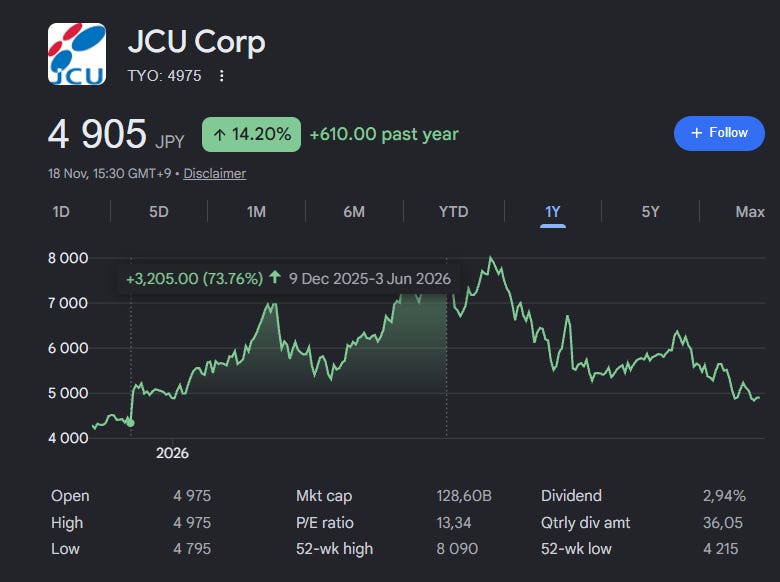
Now the stock has almost completely round-tripped. And the best part? The AI-exposure thesis is showing up in the results- albiet not where I expected.
Earnings
Revenue and gross profit has hit its highest, ever.
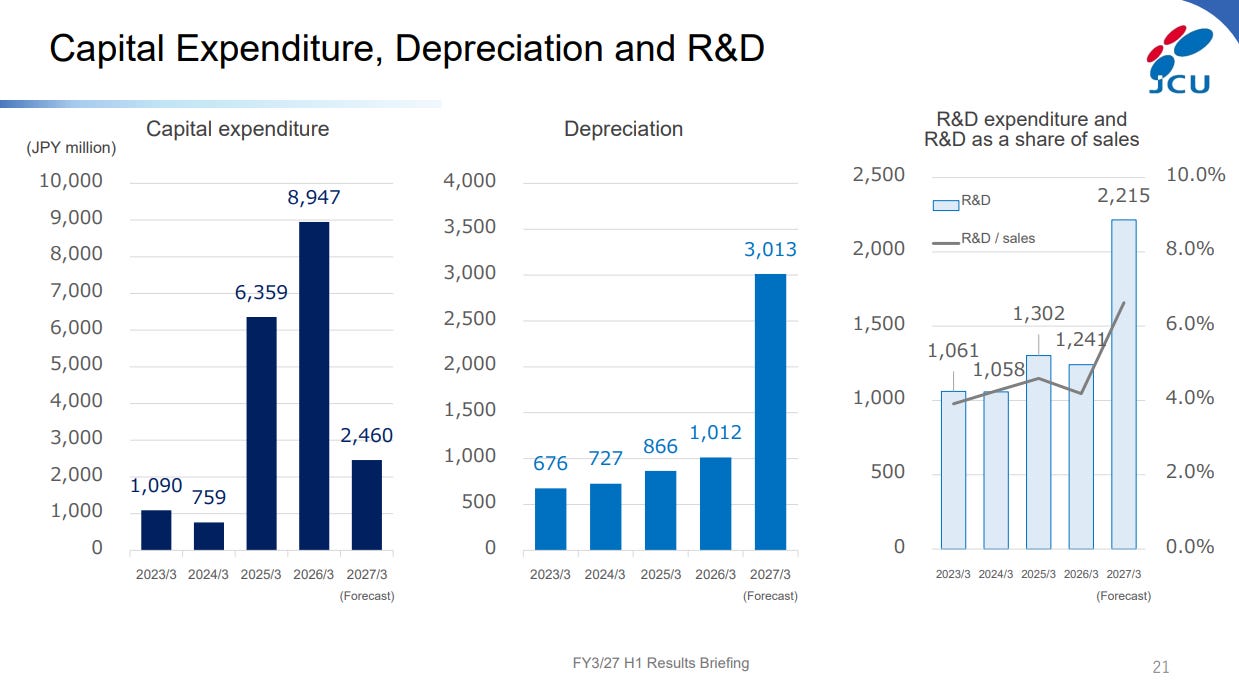
Notably, operating profit has dropped QoQ, up YoY- but this is not indicative of a detoriation in the business- this is the Kumamoto factory depreciation showing up in Q1'27 and Q2'27- see SG&A depreciation in the table below.
If you adjust for Kumamoto’s depreciation, underlying operating profit is growing, not stagnating.
JCU ROIC exceeds 30% historically. JCU is a compounder.
Kumamoto depreciation is expected to peak in 2027, and 2028.
AI-Exposure
The real AI exposure will come from Kumamoto where JCU is expanding on its next-generation semiconductor packaging chemicals- like TIPHARES.
Kumamoto has approximately 32% more land area than JCU’s existing Niigata chemical-production site. JCU has 4 other international factories, with book values all below ¥2.21bn.
Kumamoto is their biggest investment yet- at ~¥12.00bn. To put this into perspective- JCU Corp’s market cap is at ¥128,60bn.
Niigata was JCU’s only factory in Japan before Kumamoto.
Kumamoto is where TSMC’s new Gigafab is located.
From what my analysis gathers, and conversations with management, JCU’s revenue is mostly CUBRITE (chemicals for high-end PCB smartphones), but there is definitely some growth happening here due to AI-Datacenter related products.
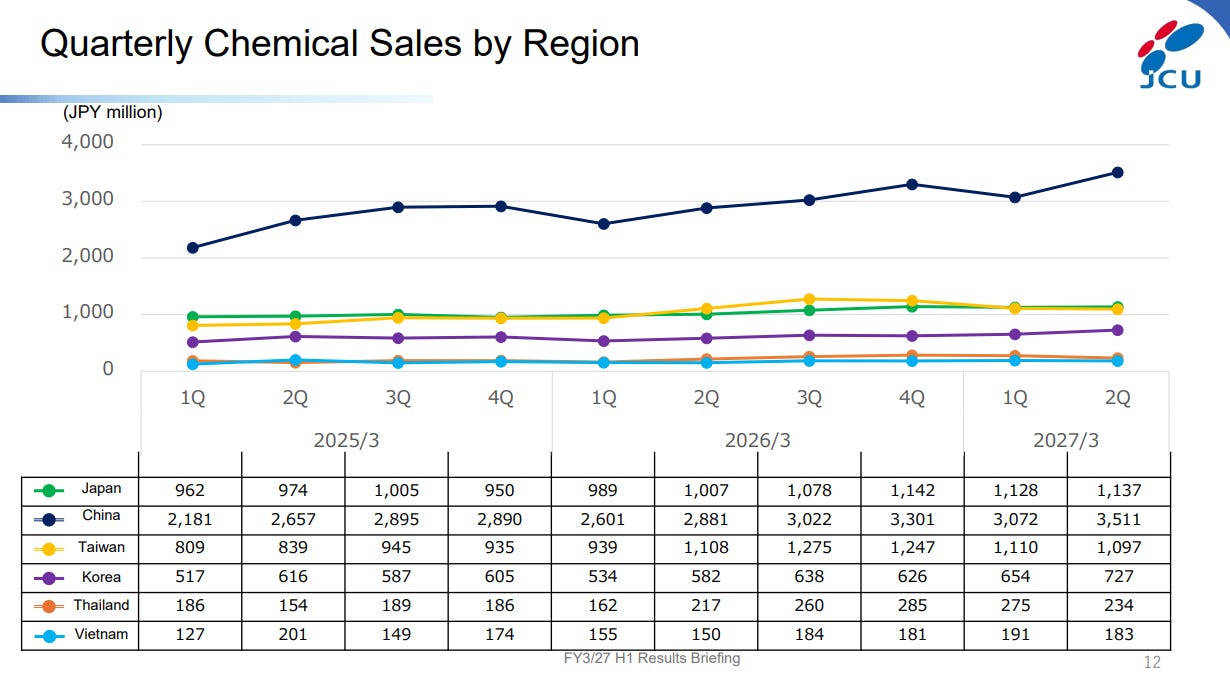
Management’s explanation of the region growth:
China
Strong demand for PCBs and semiconductor package substrates used in servers and other high-performance electronic devices. Chemical sales increased substantially YoY.
Korea
Recovery in semiconductor package substrate demand continues, driven by increasing memory demand. Chemical sales increased substantially YoY.
Taiwan
Strong demand for semiconductor package substrates used in servers and other high-performance electronic devices. Chemical sales increased YoY.
JCU Corp is a high quality business.
I am confident that management knows what they are doing with the Kumamoto factory. It will only serve to diversify their business away from CUBRITE, but I believe they will achieve just as high margins, with a sticky hard-to-qualify product.
Governance
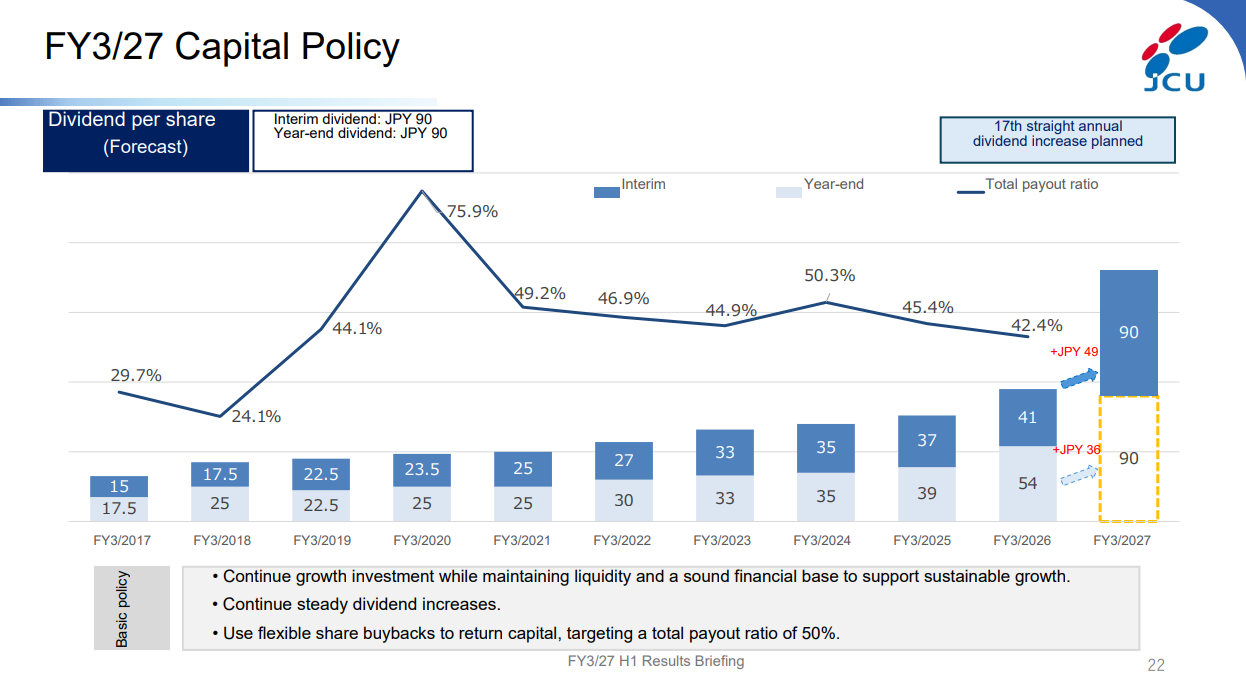
Everything you want to see and more- 50% payout policy, flexible with buybacks and dividends.
With a ROIC as high as 30% and excess cash for payouts. The valuation here remains undemanding. Especially considering the massive Kumamoto factory they will begin contributing in the next couple of years.
With a current TTM PE of 13.7 (which is depressed by the depreciation & amortization ramp up).
A forward 2027 EV/EBIT at 7.7x and EV/EBITDA of 6.2x
22% cash to market cap
Outlook
2027 and 2028 will peak for depreciation and amortization. I believe the underyling business will continue to grow. Tourists may sell down the stock on headlines- but when Kumamoto ramps up, people will take notice.
This is an extremely high quality business trading at a very low valuation, great governance, and a history of profitable capital allocation.
Important note: I said this before, and I’ll say it again - I do not expect JCU Corporation to be a multibagger. This is a high reward per unit risk investment because of JCU’s moat. I expect to realize a 100% return over around 3-4 years.
If the market jumps the gun again, and pumps it up 70% again, I will reduce my position- again.
Buy from pessimists, sell the optimists.